CRUISES
First-time cruise guide: documents, check-in and what the fare leaves out
Most first-cruise trouble starts before the ship sails: a document the line won't take, a check-in cutoff missed, a daily charge nobody mentioned.
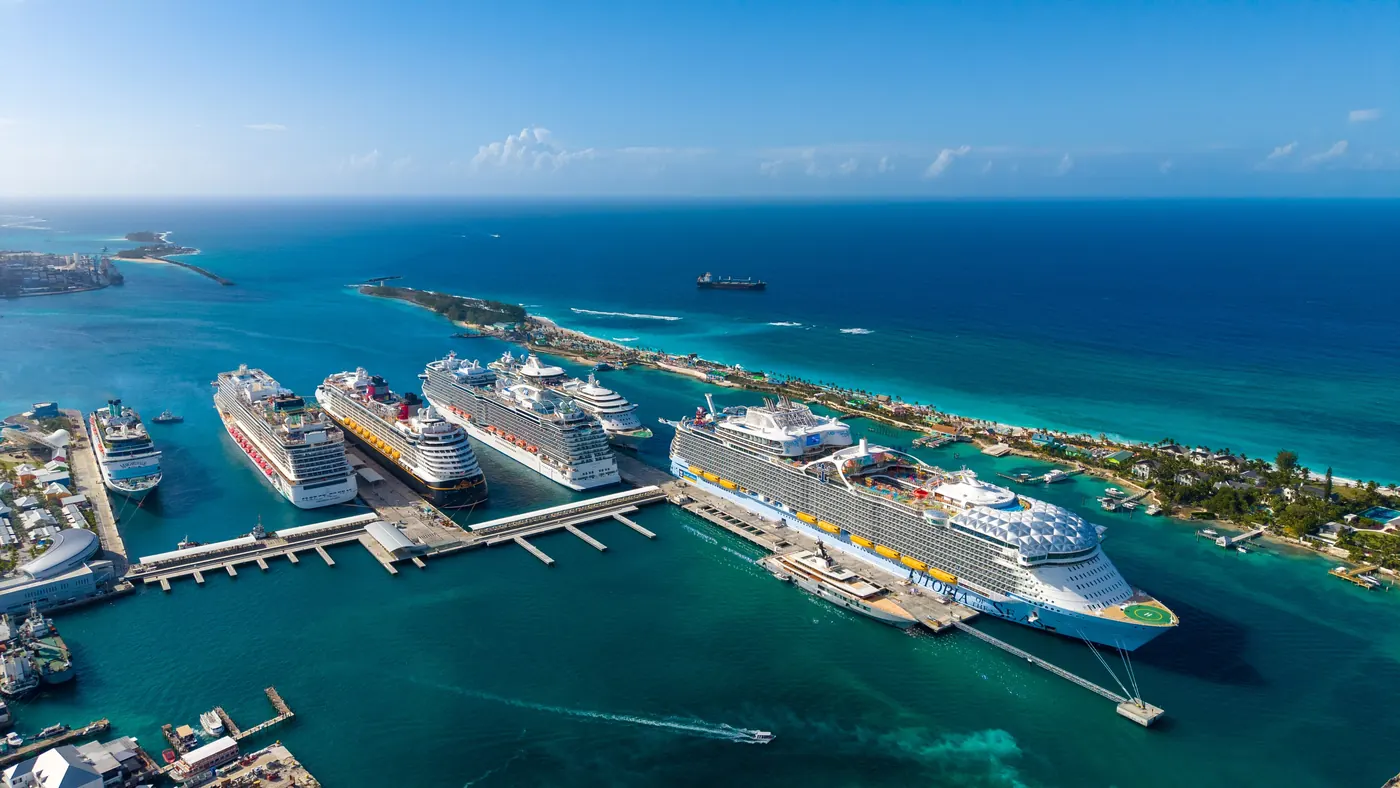
This guide follows a booking from the choice of trip to the walk up the gangway, using what the cruise lines and ports published in November 2026.
Choosing the trip
Royal Caribbean's Alaska guide says May to September is best, and our Alaska cruise guide covers the ports. The Atlantic hurricane season runs from June 1 to November 30, according to the National Hurricane Center, which matters for the Caribbean and the Bahamas. The Mediterranean has its own guide, and CruiseDirect's destinations page groups sailings by region.
CruiseDirect's last-minute page listed 4,373 cruises on November 7, 2026, and its line filter showed MSC with 760, Royal Caribbean with 486, Carnival with 389, Norwegian with 269 and Princess with 196. The cruise lines page covers the rest. A shorter sailing carries fewer days of daily charges, which is the logic behind our cheap cruises guide.
Cabins, and what they change
Royal Caribbean's stateroom FAQ sorts rooms into interior, outside, balcony and suites, and says every one has a TV, phone, private bath, shower, vanity and hair dryer. Princess's interior stateroom page describes a room inside the ship with no windows, roughly 136 to 162 square feet.
Cabin grade barely moves the daily gratuity. Three of these four lines charge one rate in every cabin below their suites, and Princess adds $1 for mini-suites, cabanas and its Reserve Collection. As listed in November 2026, Royal Caribbean charges $18.50 per guest per day ($21.00 in suites), Carnival $17.00 ($19.00), Norwegian $20.00 ($25.00) and Princess $18.00 ($20.00). Our cruise cost guide works a full week for two.
What the fare covers
Royal Caribbean's pricing FAQ lists the stateroom, the Main Dining Room, the Windjammer buffet, water, tea, select juices and classic coffees, pools, the fitness center, Adventure Ocean and the shows. Beverage packages, specialty dining, shore excursions, Wi-Fi, the spa, the arcade, bingo and the casino are extra. Carnival's help page adds lemonade, unsweetened iced tea and hot chocolate to the included drinks.
The drinks package is the big add-on. Carnival listed its CHEERS package at $83.94 per person per day bought before sailing and $89.94 on board, and every adult in the stateroom has to buy it. Carnival's Social Wi-Fi plan was $20.40 a day bought ahead and $25.00 on board, and a plan bought ahead has to cover the whole cruise. For deals that bundle these, see cruise deals.
Documents
On a round trip that stays in the Western Hemisphere and starts and ends at the same US port, CBP's FAQ lets US citizens show a government photo ID and proof of citizenship, and warns that a passport may still be required by the countries you visit. Then the lines add their own rules. Royal Caribbean's birth certificate FAQ wants an original state-certified copy, not a photocopy, with names that match your booking. Carnival's help page accepts a legible photocopy. Royal Caribbean exempts guests 15 and under from photo ID, and Carnival asks for it from 16.
A passport is the safer choice, and Royal Caribbean's passport guide makes it mandatory on one-way and repositioning cruises, on sailings with international flights, and on stops in Martinique, Panama or Colombia. It also wants the passport valid for six months after the cruise, as Carnival does. Insurance has a deadline of its own. Princess's cancellation page says its protection plans can be bought at booking or up until final payment, so the choice on travel insurance closes at final payment there, not on sailing day. Our cruise insurance guide covers what each type pays.
Getting to the port
Royal Caribbean's missed-departure FAQ suggests arriving a day early, since a guest who misses the ship pays their own way to the next port unless the Travel Protection Program covers it. If you fly, line up a ride with our airport transfers guide. If you drive to the cruise, check the port's own rates. In November 2026, Port Canaveral listed $20.00 a day plus tax, PortMiami $28 a day in Garages C, D, F and G, and Port Everglades up to $25 a day. If you're flying out of Phoenix instead, our airport parking guide has Sky Harbor's rates for leaving the car at the airport.
Sailing day
Royal Caribbean's check-in FAQ sets the cutoff at 90 minutes before sailing, and a late guest can't sail. It also requires the safety briefing to be finished before the ship leaves, with an app step followed by a visit to your assembly station. Carnival wants online check-in done by midnight Eastern the day before, with an arrival appointment, stops taking checked bags two hours before departure, and bars anyone who misses its Final Boarding time.
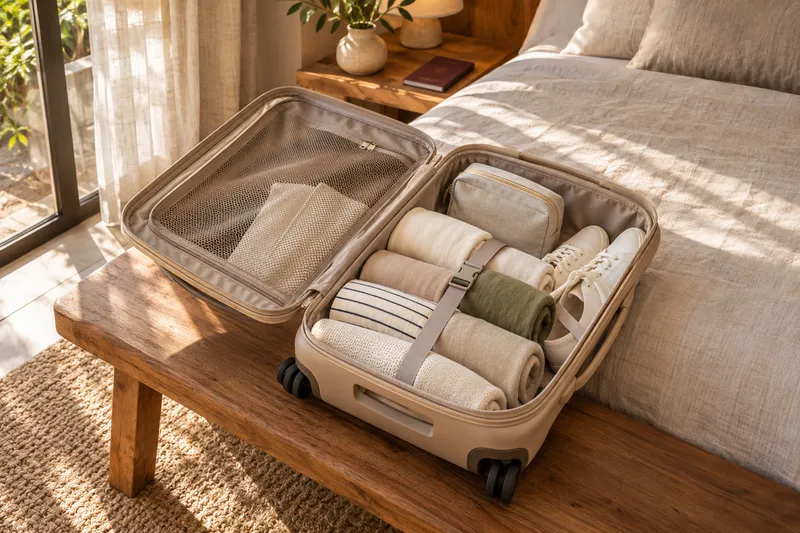
Carnival's help page also sets the rules for what you can carry. One sealed 750 ml bottle of wine or champagne per person aged 21 or over is allowed on embarkation day, plus up to 12 sealed cans or cartons of non-alcoholic drinks. Water and soda in glass or plastic bottles aren't allowed, so those drinks have to come in cans or cartons. Our cruise packing list covers the rest.
At sea and in port
Carnival advises turning on airplane mode to avoid carrier roaming fees, and warns that satellite internet speed varies. If you want data in port, our eSIM guide compares local plans.
In port, Royal Caribbean's excursion FAQ makes it your job to be aboard before the ship's scheduled departure time, and the ship won't wait for guests touring alone. A tour booked through the line is the exception: the ship waits if it runs late, and if it can't, the line arranges your return at no cost.
On health, the CDC's Yellow Book says seasickness affects up to 25% of travelers despite stabilizers, and that onboard medical care is typically not included in the fare. It advises washing hands with soap and water to cut the risk of stomach illness. The CDC's Vessel Sanitation Program inspects ships twice a year without notice, scores them on a 100-point scale, fails any ship at 85 or below, and posts every score.
Frequently asked questions
Will I get seasick?
Possibly. The CDC's Yellow Book says seasickness affects up to 25% of travelers despite modern stabilizers, and it advises packing medicine, because over-the-counter drugs bought on board cost more.
Can I change the daily gratuity?
Royal Caribbean's gratuity page says guests can adjust the daily gratuity at Guest Relations until the morning of disembarkation. The $18.50 per guest per day for non-suite staterooms is the starting figure.
What if I miss the ship?
If travel delays make you miss embarkation, Royal Caribbean says you pay your own way to the ship's next port unless its Travel Protection Program covers the delay. In a port of call, a tour booked through the line is different: if it runs late the ship waits, and if it can't wait the line arranges your return at no cost.
Can I bring a baby?
Royal Caribbean requires infants to be six months old on the first day of the sailing, and 12 months on transpacific, transatlantic and certain other routes.
Can my teenager have their own cabin?
On Royal Caribbean sailings that start in North America, nobody under 21 gets a stateroom without an adult 21 or older in it. One exception covers children whose cabin connects to, adjoins or sits across the hall from their parents' cabin.
FinalAirfare may earn a commission if you book through the partner links on this page, at no extra cost to you. Fares, fees and rules here are as the lines, ports and agencies published them in November 2026, and they change. We are not affiliated with any cruise line.